
Automated lighting is the kind of thing you stop noticing once it works, which is the point. Lights that come on at the right level, scenes that suit the time of day, switches that do what you expect, all without thinking about it. We install and wire home automation and smart lighting across Winnipeg and the Interlake, and a lot of it comes through the custom renovations we work on with designers like Charisma.
The difference between automation that feels effortless and automation that frustrates people is in the wiring and the planning behind it. Getting the right switches and controls in the right places, wiring the low-voltage cleanly, and setting it up so the system is intuitive rather than a science project.
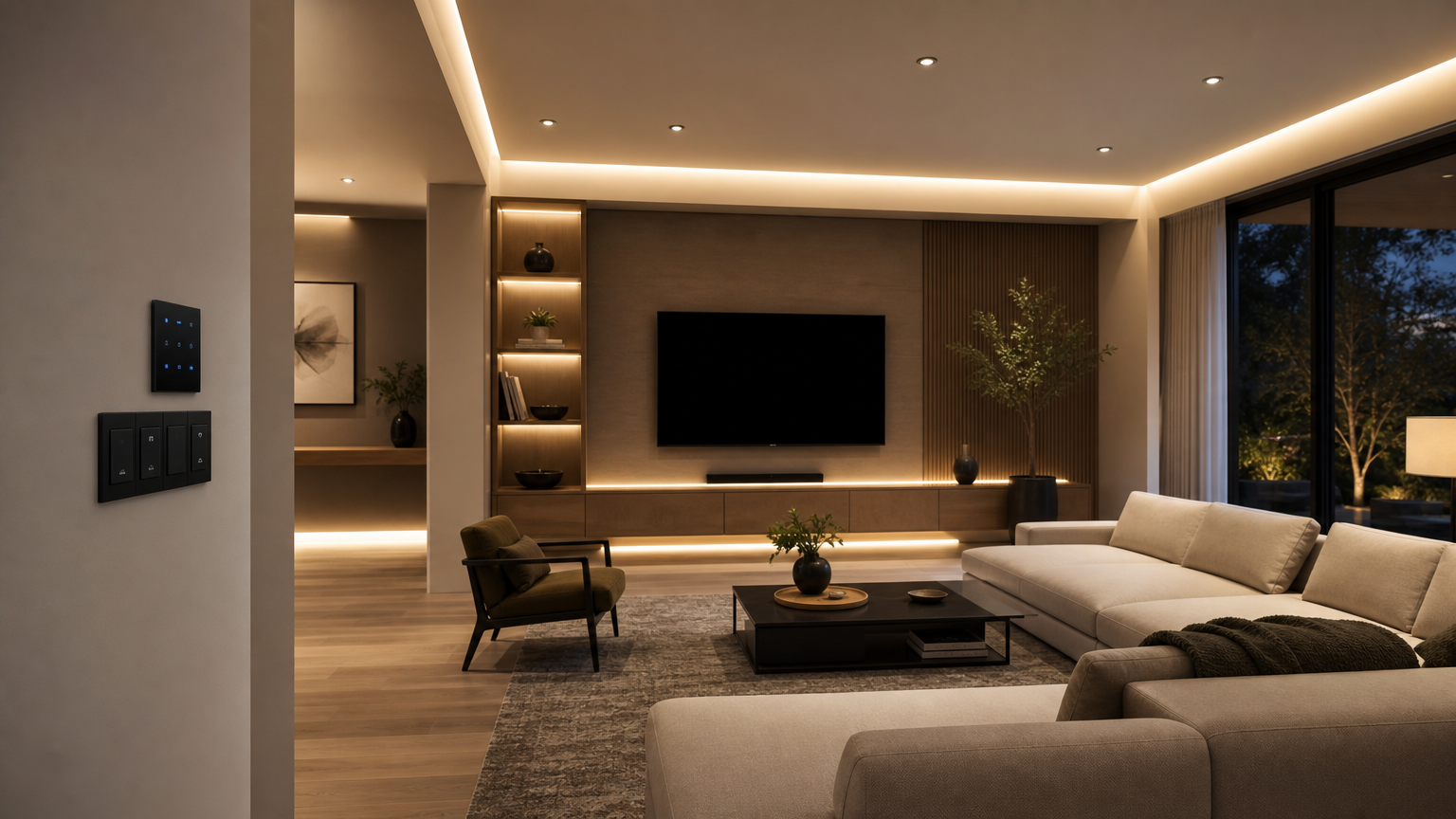
This work scales to what you want. At the simpler end it is smart switches and dimmers on the circuits that matter, set up to be controlled from a phone or by schedule. At the higher end it is a layered lighting plan with low-voltage and automated control, scenes for different rooms and times, and integration with the rest of the home, the kind of thing we wire alongside a full lighting design on a renovation. The table below shows roughly how the levels compare.
Because we handle both line voltage and low voltage in-house, the lighting, the controls, and the cabling are done by one crew that plans them to work together. On the high-end home renovations we wire around Winnipeg and out toward St Andrews, that coordination is what makes the finished system feel effortless. The cabling for automation also overlaps with the network and camera wiring a home needs, so it pays to plan all of the low-voltage at the same time.
Automation done by someone who treats it as an afterthought is worse than no automation. We plan the controls and wire the low-voltage properly, so the system is reliable and intuitive, not a source of frustration. We also keep the system understandable, so the people who live in the house can run it without a manual, and we set it up so a failed device degrades to a normal switch rather than leaving a room without light.
Sometimes. Some smart switches need a neutral wire that older boxes do not have, and automated and low-voltage systems need their own cabling. We assess what your home has and plan the wiring so the system works reliably rather than half-working.
Yes, and a renovation is the ideal time. With the walls open we can run the low-voltage and set up the switching and controls from scratch, which gives you far more flexibility than retrofitting later.
Yes. A good share of our automation and lighting work comes through high-end renovations, where we wire the plan a designer has laid out and handle the controls and low-voltage to match.
If you want lighting and controls that work the way you live, get in touch for a free estimate.
Monday – Sunday: 24/7