
A Level 2 charger turns an overnight plug-in into a full battery by morning, but you cannot legally wire one in yourself. An electrical permit is required, and it has to be pulled by a licensed contractor who has done a load calculation on your home. That is the part people do not expect when they start pricing it out. The charger on the wall is the easy bit. The wiring, the panel capacity, and the permit are where the real work is.
We install EV chargers across Winnipeg and out into the Interlake, from city garages to lake properties around Gimli and Winnipeg Beach. That means confirming your service can carry the load, running the circuit to where you park, and mounting hardware that starts in a Manitoba January without complaint.
The job starts with a load calculation, because a charger is one of the largest continuous loads you can add to a property. We confirm the panel can carry it, and if it cannot, we talk through an electrical panel upgrade before anything else. Then we run a dedicated circuit from the panel to the parking spot.
On a lot of properties out here that means getting power to a detached garage, and the distance can be significant on a rural lot or a cottage. We run the right conduit for the conditions, and where the feed goes underground, our own crew does the trenching rather than subbing it out. We pull the permit, install to the Manitoba electrical code, and have the work inspected, so you end up with a charger that works and the paperwork that proves it was done right.
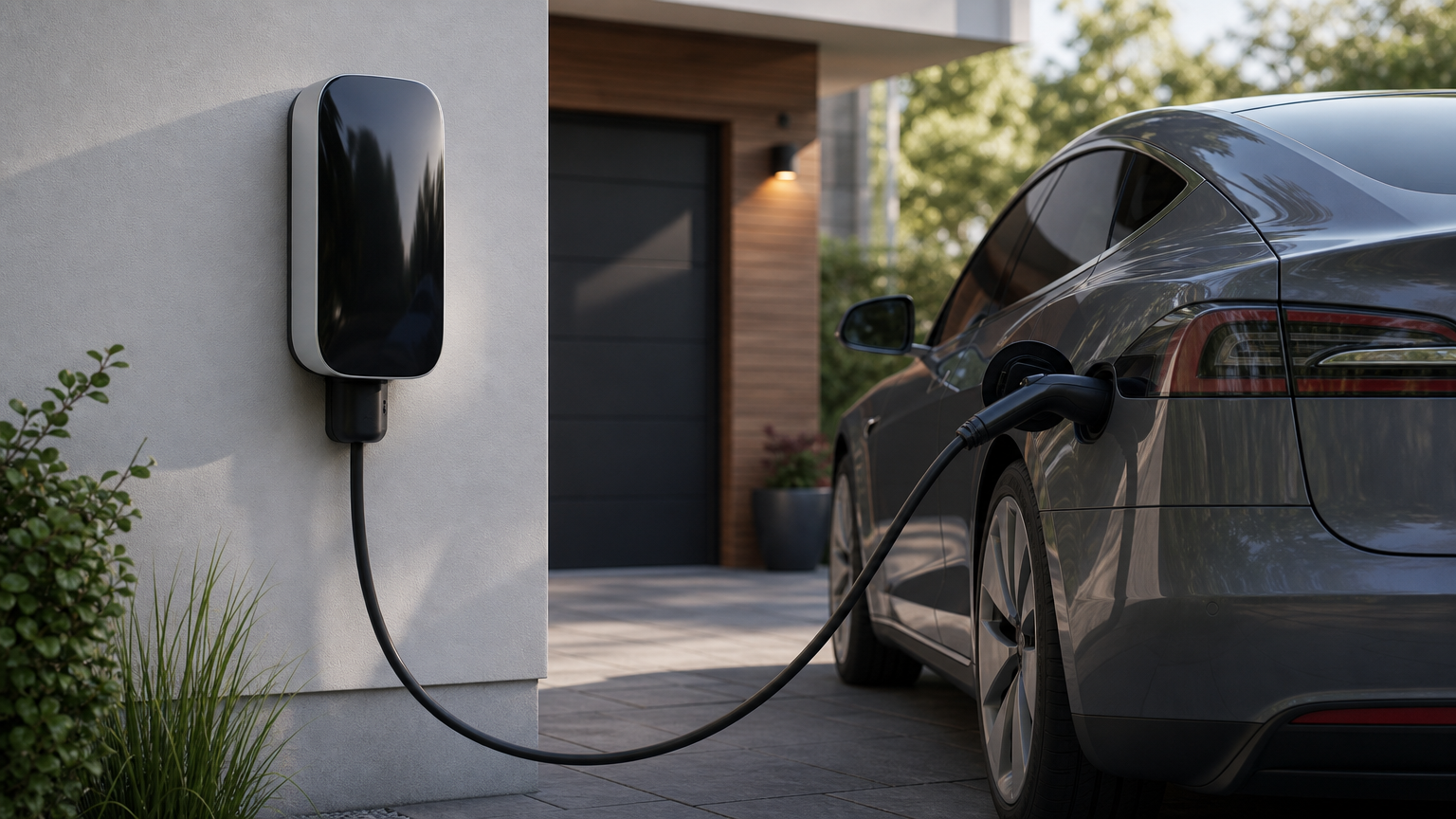
Most home installs are Level 2, running on a 240-volt circuit, which is the practical choice for charging overnight. Where the charger mounts matters, because the distance between your panel and your parking spot is the single biggest factor in a clean install and the cost of the run. If you already bought a charger, we can install it. If you have not, we will point you toward weather-rated hardware that holds up in this climate. We do not lock you into one brand.
EV charging is a newer part of the trade, and not every electrician treats the load calculation and the permit as seriously as they should. We do, because skipping either is how people end up with a tripping breaker or an install that fails inspection.
Yes. An electrical permit is required for an EV charger install, and a homeowner cannot pull it themselves. It has to be a licensed electrical contractor, who is also responsible for the load calculation confirming your property can handle the charger. We handle both as part of the job.
Sometimes. A Level 2 charger is a large continuous load, and on a property with a 100-amp panel that is already well used, there may not be room. We do the load calculation first and tell you whether your existing panel works or whether an upgrade makes sense. Many installs do not need one.
Yes, and it is common out here. Getting power to a detached garage or a lake property is more involved than an attached garage because of the distance and the feed, but it is routine work for our crew, trenching and all. It factors into the quote.
Most straightforward installs are done in a day. The timeline mostly comes down to the distance from your panel to the charger and whether any panel work is needed. We give you a clear timeline after seeing the setup.
If you are adding an EV at home or the cottage, get in touch for a free estimate and we will tell you exactly what it takes to charge it.
Monday – Sunday: 24/7